Quick answer
When buying a café, check four things before you sign: that the takings in the seller's figures match the bank statements and BAS; that the lease can be assigned to you with enough term left; who owns the espresso machine, grinders and cool room, including any roaster tie; and what the owner's unpaid hours are hiding. Make the contract conditional on the lease and your finance.
Key points
- Match the takings three ways: seller's summary, business bank statements and BAS. Business.gov.au suggests three to five years of records.
- Ask who owns the espresso machine and grinders. Many cafés rent them from the roaster, and a supply agreement can come with strings.
- A lease with little term left means you're buying equipment and a fit-out, not a business. Get the landlord's consent to the assignment in writing.
- Rebuild the profit with a paid manager and paid barista hours, because the seller's own unpaid shifts are often where the profit comes from.
- Look at takings month by month so you know which quarter you're buying into.
Before you sign for a café, check four things. First, the takings: do the seller’s figures match the bank statements and BAS? Second, the lease: can it be assigned to you, and is there enough term left? Third, the equipment: who owns the machine, grinders and cool room, and is there a roaster tie? Fourth, the owner’s hours: what does the profit look like once every shift is paid? Then make the contract conditional on the lease and your finance.
Generic business-for-sale checklists cover the first and fourth in a line or two. The café-specific traps are the other two, and they’re the ones that surprise buyers after settlement.
Do the takings in the sales pitch match what hit the bank?
Start with the numbers the seller hands you, then try to break them. Business.gov.au recommends reviewing the past three to five years of tax returns, BAS, profit and loss and cash flow statements, receivables and payables, and sales records. For a café, add a three-way match:
- The seller’s weekly takings summary (or POS reports).
- The business bank statements, looking at deposits. Cash sales that never reached the till are a classic gap; if they’re not in the bank, don’t pay a multiple on them.
- The BAS, which should line up with reported sales after GST.
Ask for takings month by month, not just a yearly total. A café that trades through a tourist summer or a CBD that empties in January looks very different depending on which quarter you’re buying into. Plot the months in our seasonal trade planner and ask yourself whether you’d survive the weakest three on the cash you’ll have left after settlement. If a seller is listing in the peak months, ask what the quiet ones looked like last year.
What is the owner’s unpaid labour worth?
Many small cafés are profitable partly because the owner is on the machine six mornings a week and does the ordering on Sunday night without drawing a proper wage. That’s fine for them. It isn’t fine for you if you plan to hire for it.
Rebuild the profit and loss with every hour paid, including your own if you’ll be working the floor. Most cafés fall under the Fair Work Ombudsman’s Restaurant Industry Award, so use its current pay guide rather than a guess, and add super and workers compensation. Our guide to wage cost percentage shows the method. If the profit disappears once a manager’s wage is in, the café may be a job rather than a business, and the asking price should reflect that.
An illustrative case: a café reports $120,000 of profit a year, but the owner works about 60 hours a week and takes no wage. Pay those hours at a fair rate, and the real return to a passive buyer may be a fraction of the headline. The price should follow the second number.
Who owns the espresso machine, grinders and cool room?
This is the question the broker’s list often skips. Ask for it in writing, item by item: espresso machine, grinders, cool room, dishwasher, ice machine, combi oven, POS hardware.
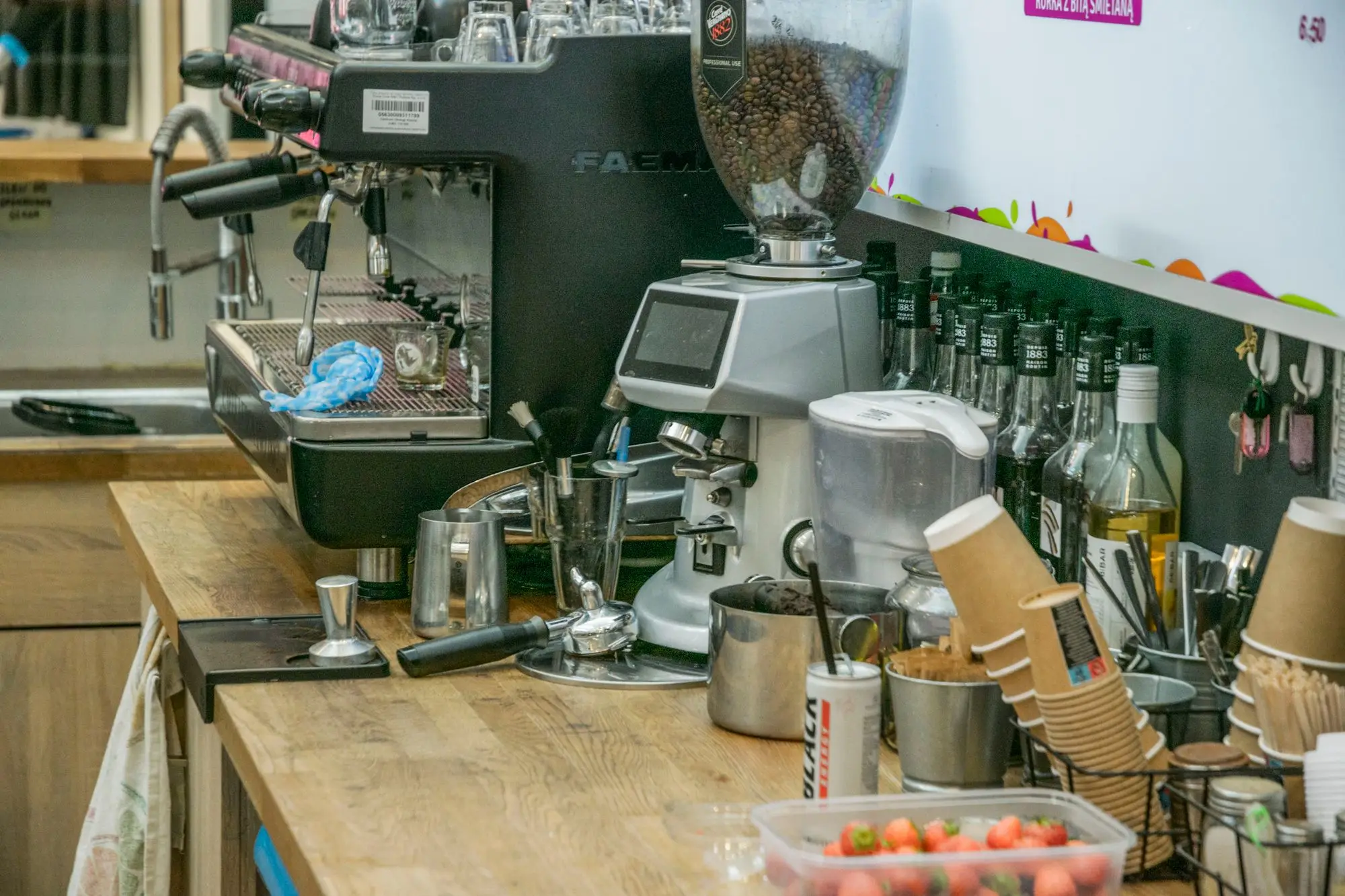
Legal firms that act for café buyers report that in many independent cafés the roaster owns the espresso machine and lends or rents it in return for coffee purchases. If that’s the case, the machine isn’t part of what you’re buying, and it may leave with the roaster, or come with strings. A commercial coffee machine with grinders and water filtration is a significant spend, so an asset you thought was in the price but wasn’t is a real hole. If you’d need to buy your own, see our coffee machine finance page.
Then check for debt against the rest of the kit. Business.gov.au says to search the Personal Property Securities Register for debts secured against business assets. A PPSR search tells you whether a finance company has a registered interest in equipment you’re about to pay for. If it does, the contract should say the debt is cleared at or before settlement.
Finally, look at condition. The sale contract might list an “approved” cool room that’s near the end of its life, and compressors rarely give much warning. Ask for service records, the age of each machine, and an independent refrigeration or coffee technician’s look at the big items. Our checklist on buying used commercial kitchen equipment applies here too.
Does the roaster agreement transfer to you?
If there’s a coffee supply agreement, get a copy before you do anything else. These are the points to read:
- Term and exit: how long it runs, and what happens on sale.
- Consent: whether the roaster has to approve a new owner, and whether it can refuse.
- Volume commitments: minimum kilograms a week, and the penalty if the new owner’s volumes are lower.
- Equipment terms: who owns, services and replaces the machine, and what you pay if you leave.
- Price: whether the price per kilo is fixed or can move.
A tied café can be fine, particularly if the roaster’s coffee is part of why customers come. But if the deal stops you changing supplier and the volumes were achieved under the previous owner’s brand, you may be inheriting an obligation you can’t meet. Ask a solicitor to read the transfer and termination clauses, and write into the contract that the sale is conditional on the roaster agreeing to the terms you’ve been shown.
If you want to talk through how a purchase like this could be funded, see if you qualify. It takes about a minute and a real person will take it from there.
How much lease do you actually have?
Without a lease you can rely on, you’re buying a bag of equipment and a fit-out that’s stuck in someone else’s room. For a café the lease is usually the most valuable thing in the sale.
Check:
- Term remaining and options. Enough runway to earn back the price and any works.
- The assignment clause. In most deals the lease is assigned to you with the landlord’s consent, otherwise you negotiate a new one. Business.gov.au says to check whether the landlord will transfer it. The Victorian Small Business Commission, for example, covers how a tenant asks for consent and the reasons a landlord can withhold it; other states have their own rules, so check yours.
- Disclosure. Ask what disclosure statement the landlord has given, and when. The VSBC page notes updated disclosure statements for Victorian retail leases.
- Rent reviews, outgoings and make-good. A café with a big rent step in year two, or a make-good clause that means stripping out the kitchen, changes the maths.
- Guarantees and bond. Expect the landlord to ask you for your own bond or bank guarantee. See our guide on lease bonds and bank guarantees and the retail lease checklist.
Make the sale conditional on the lease assignment being completed in writing. Never pay a deposit you can’t get back before the landlord has said yes.
What else belongs on the checklist?
- Licences and registrations. Food business registration, any liquor licence, and outdoor dining permits are usually not automatically transferable; confirm with the council or regulator what you need to apply for in your name.
- Staff. Which employees are staying, their entitlements and leave balances.
- Stock. It’s often valued separately on the day, so budget cash for it.
- GST. The sale of a café as a going concern can be GST-free if the ATO’s conditions are met, and the contract must say so. Your accountant should confirm, because it changes your cash on settlement day.
- Restraint of trade. A clause that stops the seller opening a competing café around the corner.
How do you fund it, and how much cash buffer do you need?
Most buyers use a mix of their own cash and a business loan. Property-secured loans start at $20,000 and go to $5,000,000, and unsecured or cash-flow options are typically $5,000 to $500,000, sized on turnover and bank statements. For a first-time buyer with no trading history, property security is usually what makes it work. Our page on buying a café or restaurant has the funding paths in detail, and café business loans covers what’s available once you own it.
Whatever you borrow, don’t borrow just the price. Stock, legal fees, the new bond, repairs you find in due diligence and a few weeks of wages before a rhythm settles are all real costs. Use the fit-out cost estimator if the plan includes changes.
Ready to take the next step?
Buying a café is the moment when a good barista or a good manager becomes an owner, and it’s a deal worth doing slowly. If you’ve found one and the checks stack up, or you’re still deciding how it could be funded, we’d be glad to help you work it out.
Enquiring takes about 60 seconds, and there’s no credit check when you enquire, so asking what’s possible leaves your credit file untouched. We don’t send your details to a pile of lenders, so your phone won’t light up with strangers. A real person looks at your situation and calls you. All we ask is that you fill the form in accurately, with real numbers, so we can match you to the right option the first time.
Frequently asked questions
What should I check before buying a café?
Prove the takings against bank statements and BAS, read the lease and its assignment clause, find out who owns each major piece of equipment, read any roaster or supplier agreement, check licences and registrations, and rebuild the profit with every hour paid at a proper wage. Make the contract conditional on the lease assignment and your finance.
Is the coffee machine included when you buy a café?
Not always. Legal firms that act for café buyers report that in many independent cafés the roaster owns the machine and the café rents or uses it under a coffee supply agreement. Ask for the ownership paperwork in writing, and list in the contract exactly which machines, grinders and fridges are included.
Does a roaster contract transfer when I buy a café?
It depends on the agreement. Some need the roaster's consent to a new owner, some come with minimum volumes or a term that you'd inherit, and some end on sale. Ask for a copy of the agreement and any equipment-use terms before you sign, and have a solicitor read the transfer and termination clauses.
How do I check there's no debt secured over the equipment?
Search the Personal Property Securities Register (PPSR) for security interests registered against the seller, as business.gov.au recommends. If equipment is under finance, the contract should require it to be paid out or transferred properly at settlement.
How much of the café's lease do I need left?
There's no single number, but you want enough term, plus options, to earn back what you pay and spend on the venue. A short remaining term also gives the landlord more leverage at renewal. Check what the lease says about assignment and what your state's retail lease rules say about consent.
Will I pay GST when I buy a café?
If the sale is of a going concern and meets the ATO's conditions, it can be GST-free, but both sides need to agree it in writing and meet the conditions. Ask your accountant before you sign, because it affects the cash you need on the day.
Can I finance the purchase of a café?
Yes, often with a mix of your own cash and a business loan. Property security is commonly what makes a first purchase work, and borrowing a working capital buffer alongside the price is sensible.